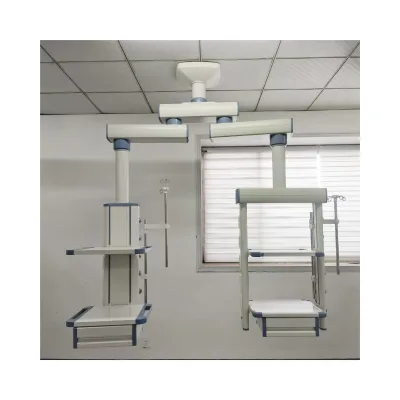
Source Explosion Proof Medical Lifting Column for Hospitals
Find 30 explosion proof medical lifting column options for hospitals, warehouses, and workshops. Compare specifications like load capacity, speed, and customization to select the right stationary or moving unit for your facility; compare the available evidence and request quotations based on your requirements.
Key considerations
Products List




Comprehensive Sourcing Guide
Explosion Proof Medical Lifting Column Sourcing Guide
Procuring explosion-proof medical lifting columns requires a rigorous understanding of both the hazardous environment requirements and the precise mechanical needs of clinical settings. Buyers must recognize that these specialized units serve critical roles in environments where flammable anesthetics, oxygen-rich atmospheres, or volatile chemical agents are present. The primary objective is to ensure that every mechanical movement, electrical component, and surface interaction remains free from ignition sources. This guide outlines the essential verification steps for sourcing reliable equipment that meets stringent safety standards while maintaining operational efficiency in high-risk medical facilities.
The market offers a variety of configurations, including stationary and moving types, with customization available to fit specific architectural constraints. Sourcing teams should focus on verifying the drive type, control systems, and lifting mechanisms to ensure compatibility with existing hospital infrastructure. Attention to detail in selecting the correct payload capacity and speed settings is vital for patient safety and staff ergonomics. By adhering to a structured procurement process, buyers can mitigate risks associated with equipment failure in sensitive medical environments, ensuring continuous and safe operation.
Product Scope and Observed Listing Signals
The observed product landscape includes units with diverse applications such as building cranes, warehouse cranes, and workshop cranes, which may indicate industrial-grade components adapted for medical use. Listings frequently highlight features like explosion-proof capabilities and insulating properties, which are crucial for preventing sparks in hazardous zones. Buyers should note that some products are described as used or have specific conditions, necessitating thorough inspection protocols before integration into sterile medical environments. The presence of artificial intelligence control systems suggests advanced automation, potentially enhancing precision in delicate medical procedures.
Observed specifications reveal a wide range of technical parameters, including maximum loads up to 6000N and speeds varying from 5-100mm/s to 200mm/s. These variations underscore the importance of matching equipment to specific clinical tasks, whether for heavy patient handling or fine instrument positioning. Some listings mention telescoping lift mechanisms and hollow steel column forms, indicating robust structural designs capable of withstanding rigorous daily use. Procurement teams must carefully cross-reference these observed signals with actual medical facility requirements to avoid selecting over-specification or underperforming units.
Technical Specifications to Verify
Verification of the lifting mechanism is paramount, with telescoping lifts being a common feature in high-precision applications. Buyers must confirm the maximum load capacity, which ranges from 4000 to 6000N in observed listings, to ensure the column can safely support the intended medical equipment or patient weight. The maximum speed settings, observed between 5-100mm/s and up to 200mm/s, should be evaluated against the need for smooth, controlled movements to prevent patient discomfort or equipment instability. Precise speed control is essential for maintaining safety during critical medical interventions.
Installation dimensions and stroke lengths, such as stroke +200mm or +350mm, must be aligned with the physical layout of the medical room. The payload capacity of 200kg observed in some listings provides a baseline for heavy-duty applications, but buyers should verify if this includes the weight of attached medical devices. Reach dimensions of 2000mm and platform dimensions like 10100 x 2290mm indicate large-scale installations that require careful spatial planning. Ensuring that the rigid chain configuration, such as 4 chains, is customizable allows for tailored solutions that fit unique architectural constraints.
Compliance and Safety Documentation
Certification verification is a non-negotiable step in the procurement process, with RoHS and CE marks being commonly observed indicators of regulatory compliance. Buyers must ensure that the explosion-proof rating meets the specific hazardous area classifications of their medical facility, such as Zone 1 or Zone 2. ISO certification, particularly ISO9001, suggests a standardized quality management system, which is critical for ensuring consistent manufacturing quality. Documentation should explicitly state compliance with medical device directives and electrical safety standards relevant to the operating environment.
Safety features like insulating properties and explosion-proof designs must be validated through third-party testing reports. Buyers should request detailed certificates of conformity that cover both electrical safety and mechanical integrity. The warranty period, observed as 12 months in some listings, provides a baseline for supplier accountability, but longer terms may be negotiated for critical infrastructure. After-sales service availability is equally important, ensuring rapid response to any technical issues that could compromise patient safety or operational continuity in high-stakes medical settings.
Cost Drivers and Commercial Terms
Pricing in the observed market ranges significantly from $115 to $109,999, reflecting the vast difference between basic components and fully integrated, customized medical systems. The minimum order quantity (MOQ) varies from 1 to 100 units, allowing for flexibility in procurement strategies for both single-unit replacements and large-scale hospital upgrades. Buyers should analyze cost drivers such as the degree of customization, material quality, and the complexity of the control system. Artificial intelligence control and full-automatic grades typically command higher prices due to their advanced functionality and precision.
Commercial terms should clearly define the scope of customization, including surface treatment, color, and standard specifications. Standard export packing is commonly observed, but buyers should verify if additional protective measures are needed for sensitive electronic components. Lead times and production schedules must be aligned with project deadlines, especially for new facility constructions. Negotiating bulk discounts for larger MOQs can significantly reduce per-unit costs, but buyers must balance this with inventory holding costs and the risk of obsolescence for highly specialized medical equipment.
Supplier Qualification and Quality Control
Supplier qualification should begin with verifying the origin of manufacture, with Wenzhou, Zhejiang, and China being common sources for these components. Buyers must assess the supplier’s capability to provide customized solutions, as medical lifting columns often require specific adaptations for unique clinical environments. The availability of after-sales service and warranty support is a key indicator of supplier reliability and long-term commitment to product performance. Suppliers with a history of providing ISO-certified products are generally more trustworthy for critical medical applications.
Quality control processes should include rigorous testing of explosion-proof features and electrical insulation properties. Buyers should request sample inspections or third-party audit reports to verify manufacturing consistency. The condition of the product, whether new or used, must be clearly documented and verified through detailed inspection checklists. Ensuring that the supplier adheres to strict quality management systems helps mitigate the risk of defects that could lead to catastrophic failures in hazardous medical environments.
Long-Term Procurement Checks
Long-term procurement success depends on establishing a robust maintenance and support framework for the lifting columns. Buyers should verify the availability of spare parts, particularly for critical components like motors, chains, and control modules. The customization options observed, such as adjustable lifting strokes and platform dimensions, should be documented to facilitate future repairs or modifications. Regular maintenance schedules must be established to ensure that explosion-proof seals and insulating materials remain intact and effective over time.
Continuous monitoring of supplier performance and product reliability is essential for maintaining safety standards. Buyers should track warranty claims and after-sales service response times to evaluate supplier accountability. Feedback from clinical staff regarding the ease of use and reliability of the equipment should be incorporated into future procurement decisions. By maintaining a proactive approach to lifecycle management, medical facilities can ensure the long-term safety and efficiency of their explosion-proof lifting infrastructure.
FAQs
Can explosion proof medical lifting columns be customized for specific applications?
Yes, customization is available for these lifting columns to meet specific application needs. Manufacturers offer tailored solutions for various environments including building cranes, warehouse cranes, shipboard cranes, and workshop cranes. This flexibility ensures the equipment fits unique operational requirements while maintaining safety standards.
What certifications do explosion proof medical lifting columns typically hold?
These lifting columns typically hold RoHS and CE certifications, ensuring compliance with international safety and environmental standards. Some models may also feature ISO certification. These credentials verify that the products meet rigorous quality and safety requirements for use in sensitive medical and industrial settings.
What is the maximum load capacity for these lifting columns?
The maximum load capacity varies, with some models supporting up to 200 kg payload capacity. Other specifications indicate a maximum load of 6000N or 4000 units depending on the specific configuration. Buyers should verify the exact capacity requirements against their specific equipment needs before procurement.
How fast can explosion proof medical lifting columns operate?
Operating speeds range from 5-100 mm/s for standard models, while others can reach up to 200 mm/s. Customization is available for lifting speeds between 10-300 mm/s. This variability allows users to select the appropriate speed for their specific medical or industrial lifting tasks.
Where are explosion proof medical lifting columns manufactured?
These products are primarily manufactured in Wenzhou, Zhejiang, China. The origin indicates a concentration of production facilities in this region. Buyers sourcing these items should consider the logistical implications of importing from this specific location when planning their supply chain and delivery schedules.
What is the minimum order quantity for these lifting columns?
The minimum order quantity ranges from 1 to 100 units. This flexible MOQ allows both small-scale and large-scale buyers to procure the necessary equipment. The variation depends on the specific supplier and product model, providing options for different procurement volumes and budget constraints.